
matcha
Matcha scans loose ear studs and finds the best-matching pairs for earrings, automatically. Two carousels, a hundred studs, fifty pairs, in one run of the machine.
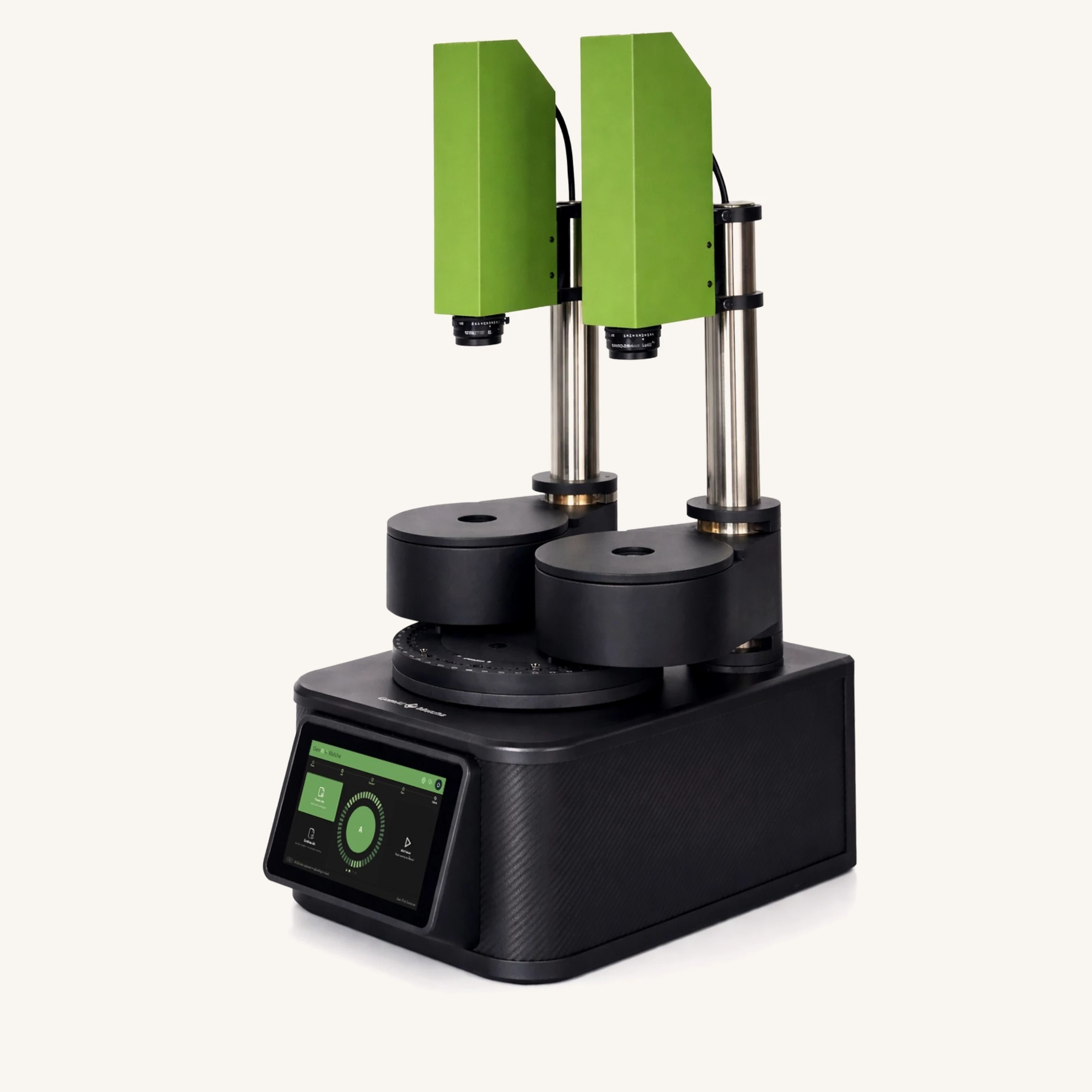
Pairing diamond ear studs by eye is slow, and two graders rarely agree. Matcha measures every stud the same way and proposes the pairs.
How pairs are made today.
- It takes hours
- A parcel is sorted stud by stud, by hand, under a lamp. A hundred of them can take a full morning, and the next parcel starts from zero.
- Nobody can hold a hundred studs in their head
- By the eighty-fourth stud, the first one is a memory. So pairs get made from what is in front of you rather than from the best the parcel has to offer.
- Two graders, two answers
- A good pair is a judgement call, and it shifts between people, and between Monday and Friday for the same person.
- The work wears people down
- Hours bent over a bench under bright light is hard on eyes, neck and back. It is skilled work that costs the body more than it should.
- Fewer people want the job
- Training a sorter takes years, and the next generation is not lining up for it. The expertise is getting harder to replace.
Matcha measures every stud in the parcel the same way, compares all of them against each other, and proposes 50 pairs out of 100 studs. The sorter stops grinding through studs and starts reviewing decisions.
Specifications
- Capacity
- Two carousels of 50 ear studs, 100 per job
- Run time
- Around 5 minutes, from scan to analysis
- Imaging
- Two camera heads, two lighting environments to read different properties of a diamond
- Footprint
- 300 × 400 mm, 600 mm tall
- Control
- On-board touchscreen
Ask us about batch sizes and integration with your own systems.